1. Branding
Brands like PureGym have become highly recognisable, and having a distinctive and coherent design across their online marketing and physical locations is a big part of this.Choosing a logo
Image is important, so you’ll want to get your logo right. Here are some things to consider:- Is the name of your company similar to any of your competitors?
- How does it speak to the kind of customers you want to attract?
- Does your logo and fitness branding distinguish you from your competition while being clearly associated with the fitness industry?
- Is your logo simple, but memorable? Think: the Nike swoosh, the McDonald’s M
Building a professional website
Once you’ve created your logo, you can extend this design across your website. We might recommend employing a certain fitness web designer to do this for you, but the main principles you should follow if you do go it alone include:- Use a simple layout and make sure it’s easy to navigate
- Try to include photos and videos to give visitors a sense of your business
- It needs to be responsive and optimised for mobile users
- Make sure the colours you use complement each other
Positioning
Brand positioning is all about the unique value that a brand presents to its customers. Ask yourself:- Is your gym an accessible, mid-range or high-end brand?
- What is your Unique Selling Point (USP)?
- What kind of personality are you trying to convey?
Customer profiling
A customer profile will help make sure your advertising is directed at the right type of customer. You need to think about:- The age range of your ideal clients
- Whether the training or services you provide are mainly aimed at a particular gender.
- The level of fitness and gym experience your target client will already have.
- What kind of things your customers will do for a living. How will this affect their availability to use your facilities? When will your facilities be available?
2. Google Maps Optimisation
If your business isn’t appearing on Google Maps, you’re in trouble. It’s more likely to help you secure leads than your actual website, so all the information a prospective customer might be looking for should be here. This means not only your address, opening hours and phone number, but images and videos along with descriptions of your services and answers to common questions. They’re always adding new stuff to Google Maps, and the more you make use of its various features the more likely you are to appear in searches. But how do you compete in an already crowded marketplace?Data accuracy
You might be surprised how often this is overlooked. If your data (such as address, telephone number etc.) isn’t correctly listed across however many locations you have it’s going to impact your Google ranking, and how visible you are on Maps.Review building strategies
Reviews factor in massively to which companies gain prominence on Google Maps. In a perfect world, they’d all be five stars, but even if you have some bad ones you can respond to those customers and show off your customer service skills. So, the more reviews, the better - and there are definitely some strategies you can employ to encourage customers to give you some glowing testimonials, including:- Asking customers to leave a review! It might seem obvious, but if you prompt customers at the right time - maybe in person after a session, or in the email signature of some kind of promotional offer - a certain percentage of people will oblige. If you’re asking them via text or online then remember to add a direct link so they don’t have to jump through too many hoops.
- Add a QR code on your business card that sends users directly to your Google Maps reviews.
- Add a link to your Google reviews at the bottom of your invoices.
- Set up an automated email to prompt your customers to add a review after they’ve bought something or paid for a service.
- Offer incentives. Maybe they could join a session for free or you offer to donate a small amount of money to charity for each review.
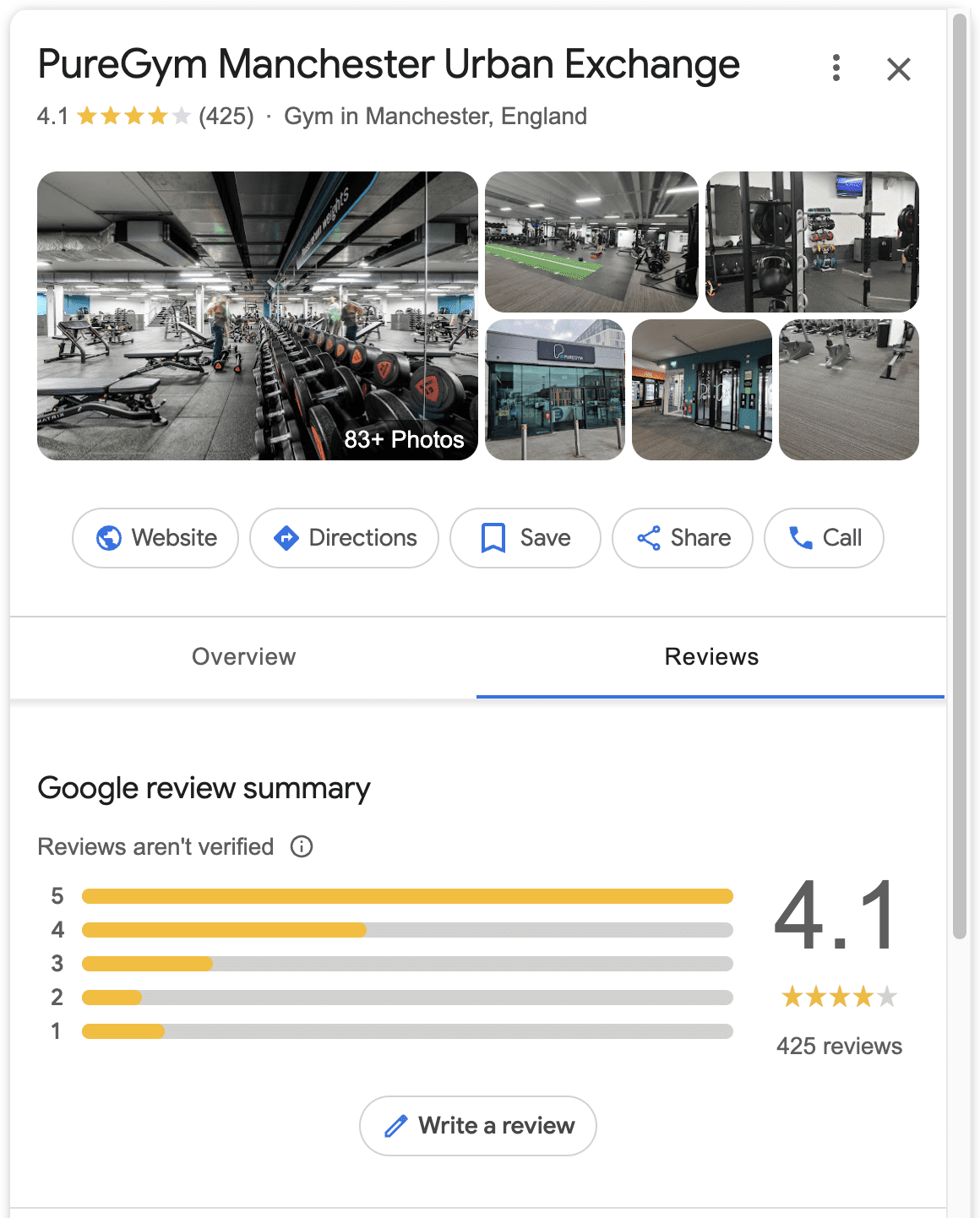
Reviews have a big impact on both customers and Google performance
Google Business Messages
As long as you stay on top of your messages, Google’s Business Messages (which is also integrated into maps) allows you to interact with your customers through multiple channels, instantly elevating your customer service. Instead of going to your website first or searching through your social profiles, they can chat with you directly via the message button on the app/web browser. A word of warning, however: most customers expect fast responses, so it’s best practice to message them back within 24 hours. Your Maps profile will display how responsive you are, which might impact whether people decide to interact with your business or not. One of several response-time options will be displayed on your profile:- Usually responds in a few minutes
- Usually responds in a few hours
- Usually responds in a day
- Usually responds in a few days
3. Google Maps Optimisation
- Google Maps Data Accuracy
- Review Building Strategy
- Number of photos/videos added
- Turning on the chat feature and responding to requests.
- Posting on your Google Maps listing
- If you’re a gym, you need a Google Maps listing for every location. Ideally, each location would have a different phone number so the NAP (Name, Address, Phone) would be unique for each location.
- As a Personal Trainer, if you work from home you can list this address on your Maps listing. If you work in multiple gyms, you’ll most likely have to make a Google Maps listing that is known as a ‘service area business’, which means Google won’t show your exact address on your listing.
- If you want people to find your business online (and in the real world) it’s vital to have a properly set up Google Maps listing. People may contact you purely based on your Google Maps listing without even clicking through to your website, so everything they need should be here. Not just your address, opening hours and phone number, but images, videos if possible, descriptions of your services and answers to common questions. You can even run special offers and promotions right from your Google Maps listing. Anything that could make it easier for a potential customer to decide to contact you should be included.
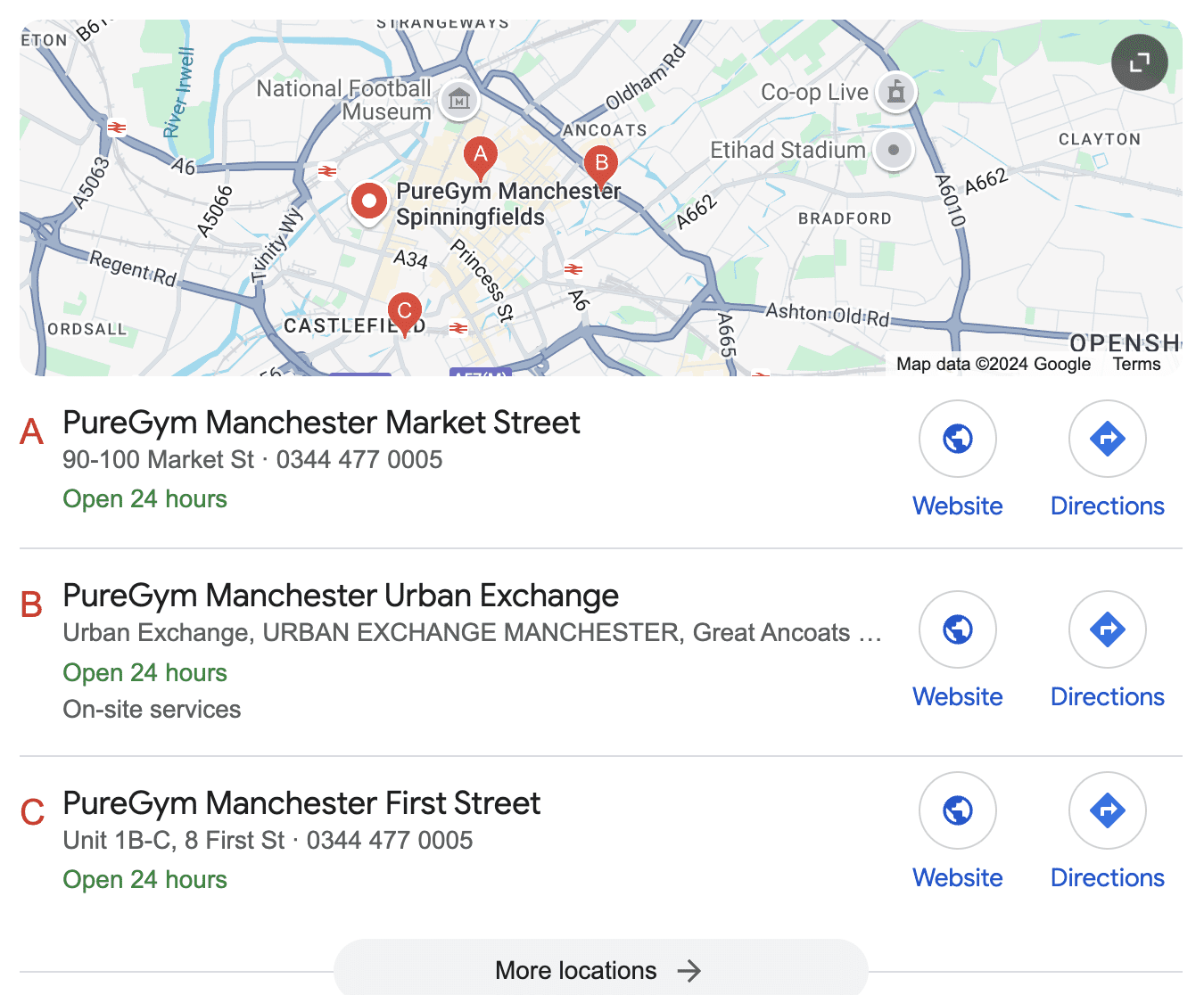
Examples of PureGym's Google business listings
4. Local SEO
Local SEO is a vital tool in order to get found by more potential customers in your area. Google generally picks just three businesses to showcase for ‘near me’ type searches and the competition is fierce. Local SEO from an experienced company will give you the best chance of appearing in those coveted top spots and remaining there for as long as possible. Your competition will be investing in SEO too, so consider how competitive your local area is for the type of services you offer when you put some budget aside for this. As a local business you’re going to be getting most of your business from people who are using Google Maps to find gyms and PTs in their area, so having a decent level of visibility here is absolutely vital. Key parts of local SEO include:- Having a fully filled out and accurate Google Maps listing.
- Getting lots of reviews on your Google Maps listing with a high average score.
- Getting your business mentioned on lots of other higher authority websites and directories such as Yell (this is called ‘citation building’ - a citation being a mention on a webpage of your business NAP).
- Ensuring all the mentions of your business (NAP) are consistent, e.g. addresses and phone numbers formatted in the same way.
- Having a link to your website on your Google Maps listing and building a high authority website by getting links from other trusted sites.
- You’re now able to post items on your Google Maps listing (like a social media channel), and you can also accept customers here, too. No one knows the real Google algorithm, but it’s possible that posting regularly and promptly responding to comments and queries on your Maps listing will help you rank higher in search.
5. Google Ads
Any new or growing website isn’t always going to appear at the top of Google’s search results for every service it offers, especially in a competitive environment. The solution to this problem? Paid Google Ads:- You can set aside a budget, paid to Google, to ensure that your business is right up there in position one for at least some of the day.
- If your ads are set up and optimised by an experienced team, you can reach more people than you otherwise would with some smart targeting.
- Track insights so you know what type of people are clicking on your ads and which services they’re most interested in.
- Use Ad data to discover tweaks to your website which can improve the performance of your ads and their conversion rate, making sure you get the most out of every pound you spend on ads.
- You can specify your Google Ads to show up on Google Maps listings, which is very useful for local service providers.
- If someone’s looking for a PT in their local area, they might Google ‘personal trainer Leeds’, for example. If you don’t have a website that’s regularly updated and optimised, it’s unlikely your listing will appear at the top of the search results unless there’s no competition. Paying for Google Ads allows you to jump the queue and get to the top of the page.
- If you’re selling an online training program, you might want to find websites and forums that lots of potential customers visit and choose to display your Google Ads on those sites. This can get right in front of potential customers when they’re in the researching or buying phase.
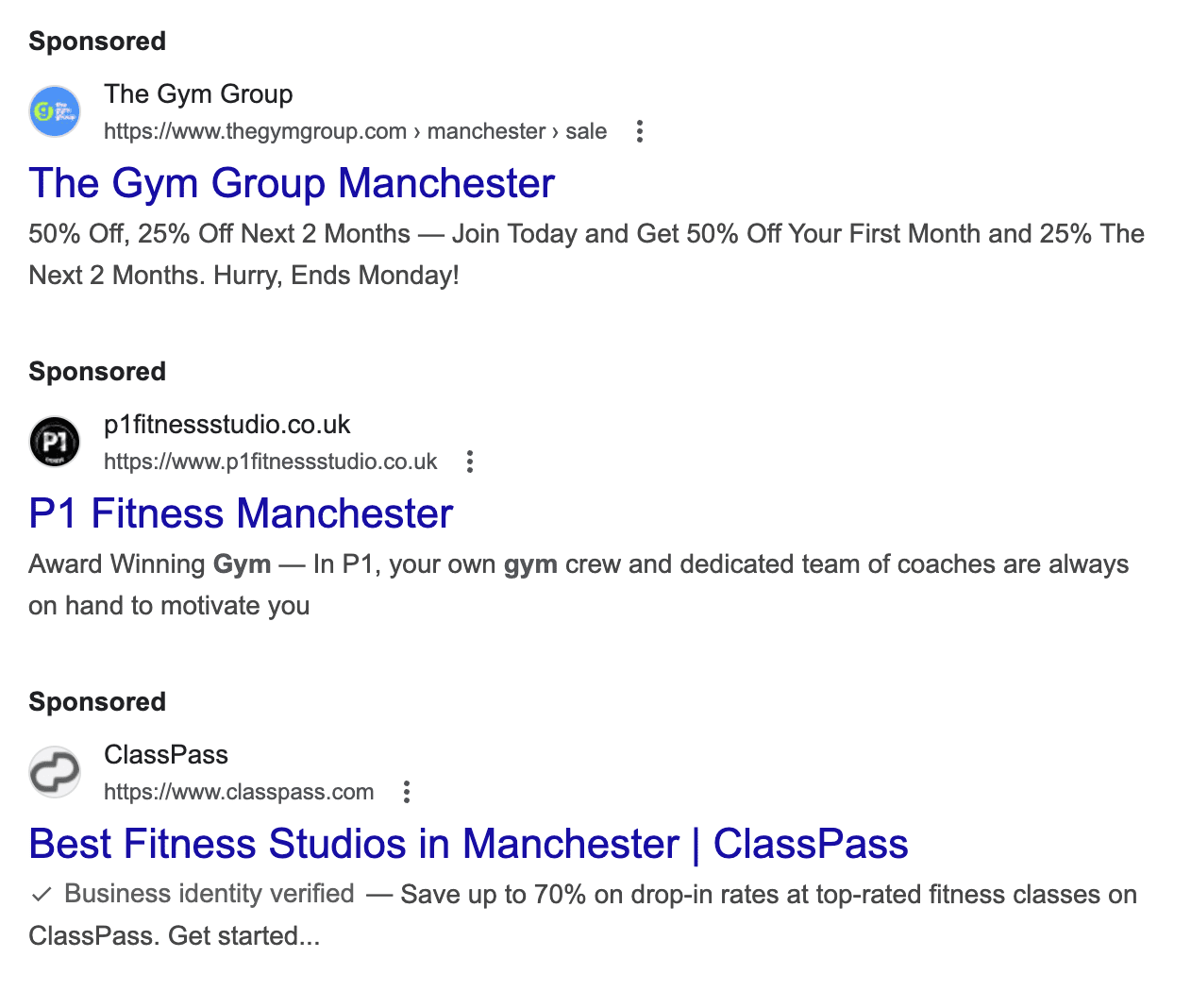
Some examples of Google Ads shown when searching for gyms in Manchester